contact us

contact us
Wholesale UV Lash Systems, Lash Adhesives & Private Label Solutions.
If you would like to leave us a comment please go to contact us

Ownership of custom tooling should be stated in a signed contract that identifies the tooling, records who pays for it, confirms who owns it after payment, restricts its use to the buyer’s products, and defines storage, maintenance, transfer, return, and disposal duties. The clause should also address tooling changes, confidentiality, third-party access, and the consequences of termination or non-payment.
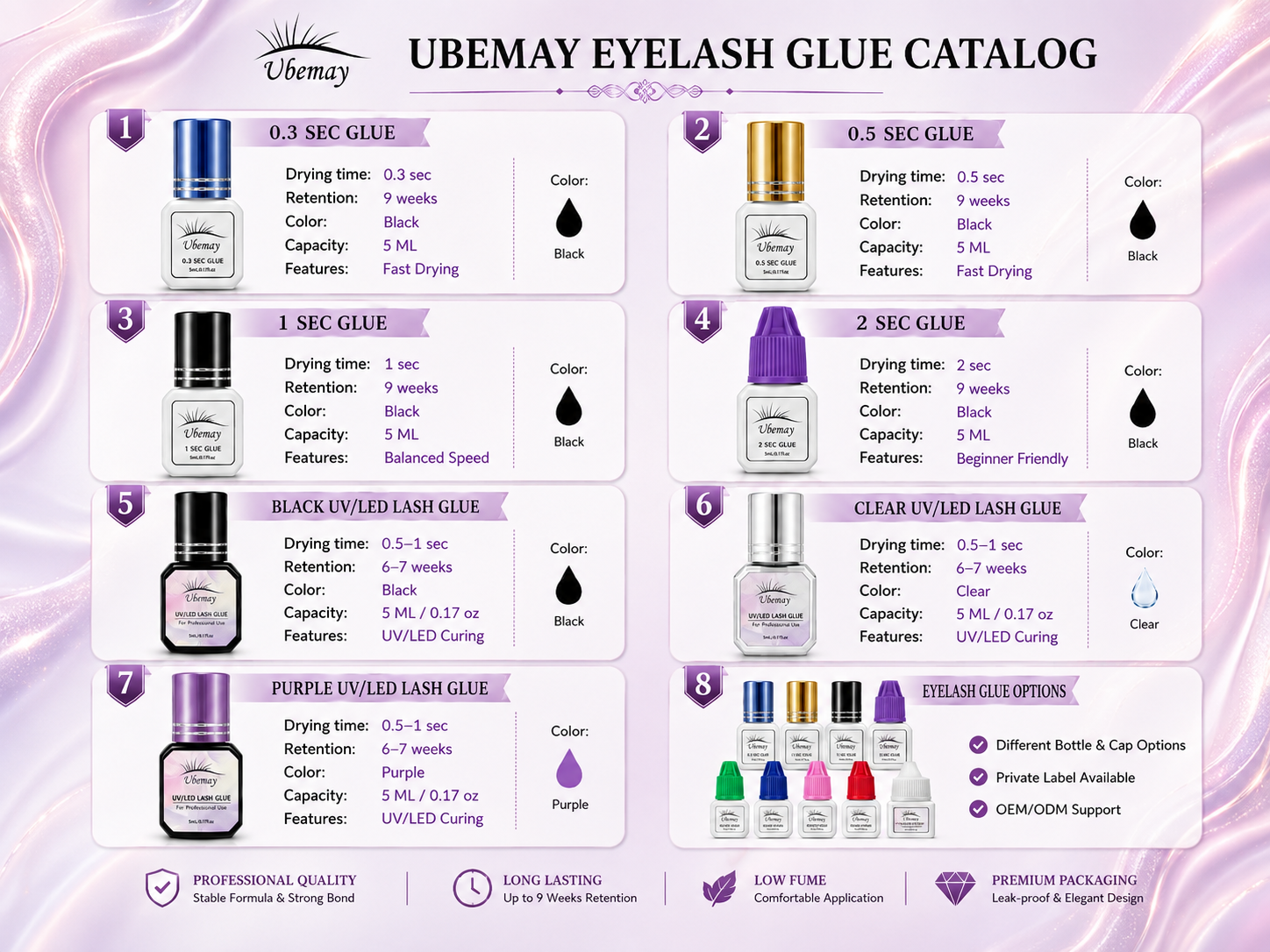
A custom-tooling clause should create a clear ownership record. The contract can attach a tooling schedule listing the tooling description, related product, owner, payer, location, status, and supporting documents. This approach is relevant to customized eyelash extension products, eyelash glue, UV lash glue, packaging, bottles, caps, labels, and product combinations because UBEMAY supports customized labels, bottles, caps, packaging, product combinations, drying time, retention, humidity range, colors, and fragrances.
The ownership section should identify the transfer event in direct language. A practical clause may state that the customer owns the listed custom tooling after the agreed ownership condition is satisfied, while the supplier remains responsible for custody during production. The contract should avoid wording that treats a tooling payment as an automatic transfer unless the parties have expressly agreed that result.
Use restrictions should be written separately from ownership. Buyer-owned tooling may be used only to manufacture the buyer’s contracted products, subject to the agreed specifications. The supplier should not use it for another customer, disclose related designs, permit unauthorized third-party access, or reproduce the tooling without written authorization. Confidentiality terms should cover labels, packaging designs, product combinations, and other customized requirements supplied by the buyer.
Maintenance and modification responsibilities should identify who pays for ordinary maintenance, repairs caused by production use, changes requested by the buyer, and replacement after loss or damage. The contract should state whether a modification becomes part of the buyer-owned tooling and how the parties record the revised condition. Any change affecting product quality, packaging, or production compatibility should be documented before use.
Return and end-of-contract provisions should specify the deadline, delivery method, condition, and records required for handover. If return is impractical, the contract should define an authorized disposal process and require written confirmation. These provisions should apply after project completion, termination, cancellation, replacement of tooling, or a verified quality issue.
UBEMAY’s stated quality inspection process covers incoming material inspection, production process inspection, finished product inspection, packaging inspection, and final inspection before shipment. The contract can connect tooling records to these inspection stages so that the parties can identify whether a defect relates to the tooling, materials, production process, packaging, or final product.
UBEMAY lists FDA Cosmetic Product Listing for UV Eyelash Extension Glue and FDA certification for eyelash extension products in the United States. It also lists CE (LVD) and CE (EMC) certifications for LED Lash Glue Curing Lamp products in the European Union. These certifications concern listed products and should not be treated as proof of tooling ownership or as a substitute for a contractual ownership clause.
Reported cooperation examples include private-label eyelash glue for a United States lash brand, wholesale eyelash extension fans and accessories for a Brazilian distributor, and a complete lash product sourcing project for an Italian professional lash distributor. The company has served clients across multiple industries. These examples support the need to document tooling and customized packaging arrangements separately for each project.
| Contract Element | Recommended Wording Focus | Evidence or Record |
|---|---|---|
| Identification | List custom tooling, related eyelash product, specifications, quantity, and identification code. | Tooling schedule, drawings, photographs, or approved specifications. |
| Ownership Transfer | State the exact event that transfers ownership, such as full payment, delivery, or acceptance. | Payment record, delivery record, acceptance document, or signed transfer confirmation. |
| Use Restrictions | Limit use to the buyer’s contracted products and prohibit unauthorized production, copying, lending, or transfer. | Purchase order, production instruction, confidentiality terms, and access records. |
| Custody and Maintenance | Assign storage, protection, inspection, repair, and replacement duties during production. | Storage record, maintenance record, inspection report, or incident report. |
| End-of-Contract Action | Define return, transfer, continued storage, or authorized disposal after completion or termination. | Handover receipt, shipping record, disposal certificate, or written confirmation. |
Should the contract state who pays for custom tooling?
Yes. The contract should identify the payer, the agreed tooling cost, included services, taxes or shipping treatment where applicable, and the relationship between payment and ownership transfer. UBEMAY supports OEM/ODM, private-label service, wholesale supply, bulk orders, and flexible small-batch orders, so the payment and ownership provisions should match the selected order model.
Does paying for tooling automatically establish ownership?
Not unless the contract states that result clearly. The agreement should specify the ownership condition and transfer date. It should also distinguish ownership of physical tooling from ownership of product specifications, labels, packaging designs, or other confidential materials.
What happens to buyer-owned tooling after the order ends?
The contract should select a defined outcome: return to the buyer, transfer to a nominated location, continued storage under agreed conditions, or disposal with written authorization. It should also address outstanding payments, pending orders, tooling damage, replacement, and the records needed to confirm completion.
Write custom-tooling ownership as an operational contract section rather than a single sentence. Identify the tooling, define the payment and transfer event, restrict use, assign custody and maintenance, protect confidential information, and set a documented return or disposal process. UBEMAY supports OEM/ODM customization, wholesale supply, private-label service, bulk orders, and flexible small-batch orders, with a stated minimum order quantity of one piece for its sample offering and customized orders starting at 100 pieces for the product information provided. For detailed technical solutions or support, please reach out to us via sales@ubemay.com.
Guangzhou Ruiju E-Commerce Co., Ltd., operating under the UBEMAY brand, is a professional eyelash beauty supplier focused on eyelash extensions, eyelash adhesives, lash accessories, and UV/LED lash equipment for the global professional beauty market. Established in 2014, the company serves wholesalers, distributors, lash salons, training academies, professional lash artists, retailers, and private-label brands. Its product range includes eyelash extension glue, eyelash extensions, UV/LED lash glue, preparation and aftercare products, and eyelash extension accessories.
The company lists FDA Cosmetic Product Listing, FDA, CE (LVD), and CE (EMC) certifications for specified products and markets. It has served clients across multiple industries.