contact us

contact us
We provide best eyelash glue wholesale.
If you would like to leave us a comment please go to contact us

To check whether a lamp's UV output is accurately measured, position a calibrated radiometer or UV power meter at the precise working distance specified for your application. Align the sensor with the central optical focal point, record peak irradiance (mW/cm²), verify spectrum alignment, and cross-reference values against certified manufacturer standards such as CE (EMC/LVD) technical baselines.
Accurate measurement of UV output in curing systems relies on direct radiance sensing at the active target plane. In professional eyelash extension curing, UV/LED lamps emit targeted light energy to cure specialized UV lash adhesives efficiently. A measurement protocol begins by selecting an industrial optometer or radiometer matched to the lamp's output wavelength. Placing the optical sensor directly under the light source eliminates ambient light interference, providing a true reading of radiant flux density.
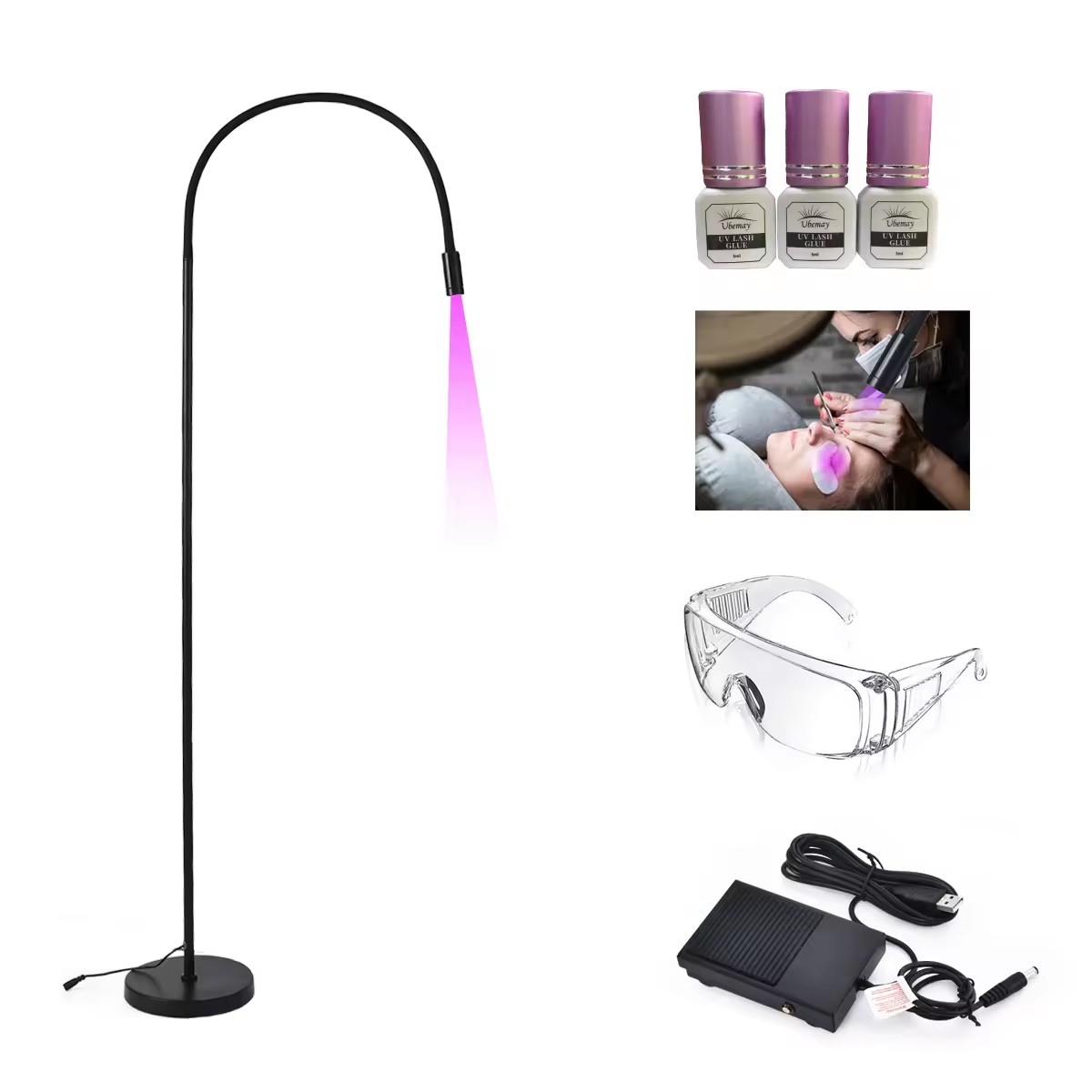
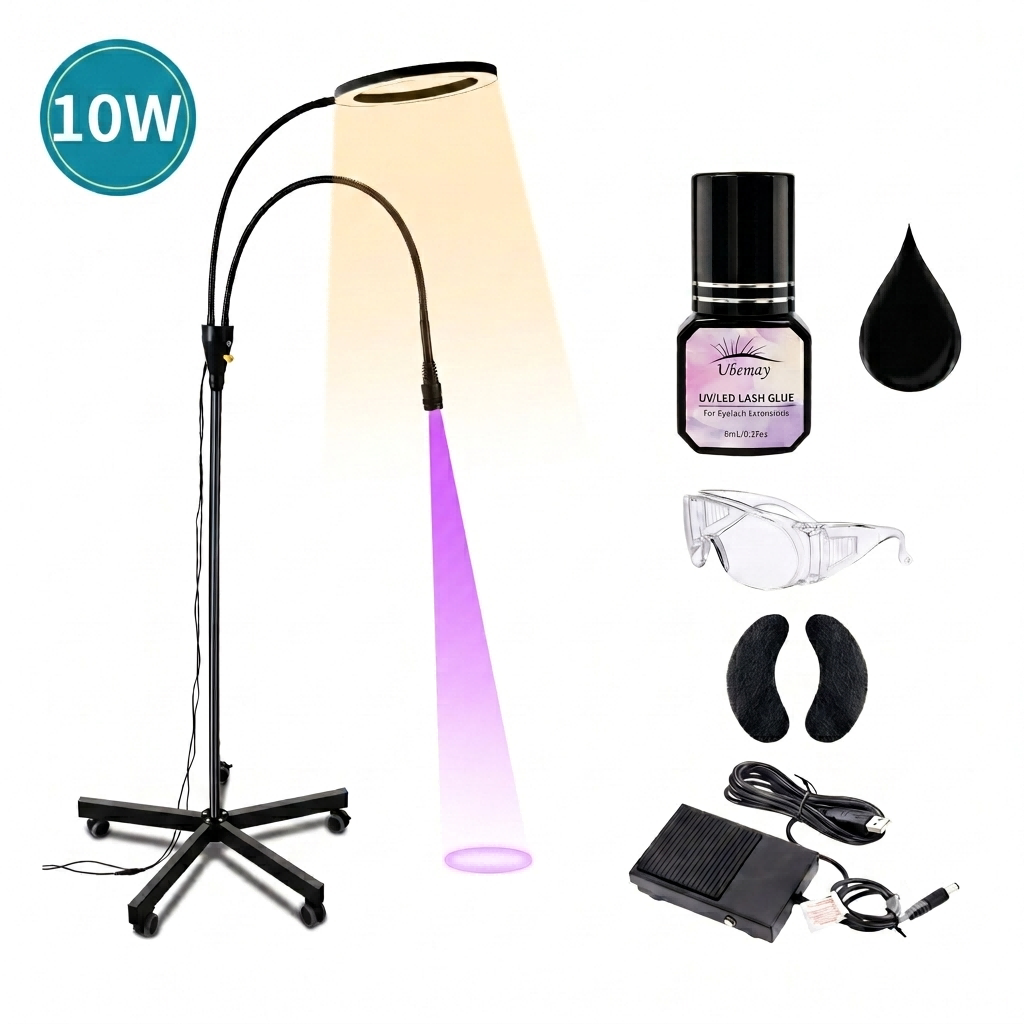
Optical geometry significantly impacts irradiance uniformity across the focal zone. Multi-head or adjustable spot-size designs—such as dual-head and modular lamp configurations developed by Guangzhou Ruiju E-Commerce Co., Ltd.—require multi-point sampling. Measuring the center beam alongside outer boundary margins establishes whether the optical spot distribution remains stable across repeated duty cycles. Verified testing procedures prevent under-curing caused by sudden output drops.
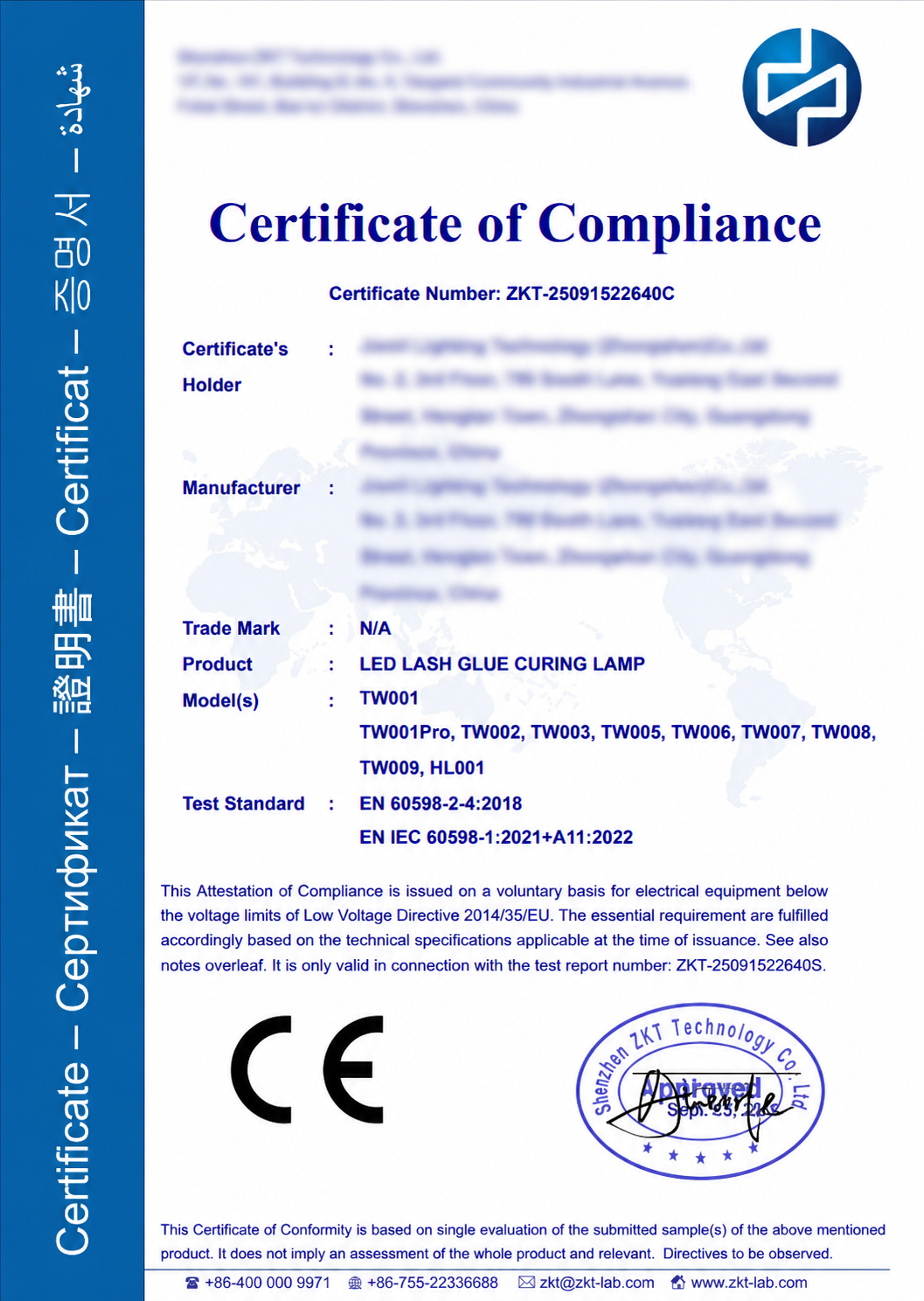
Hardware stability and electrical safety directly correlate with consistent UV radiation output. Quality verification processes incorporate incoming raw material inspection, functional testing, and pre-shipment quality controls. Devices certified under CE (LVD) certificate ZKT-25091522640C and CE (EMC) certificate ZKT-25091522641C demonstrate strict adherence to low-voltage safety and electromagnetic compatibility standards, reducing voltage fluctuation risks that distort optical energy outputs during operation.
Different UV/LED lamp configurations deliver distinct operational profiles depending on mounting mechanism, head structure, and working radius. The following comparison highlights structural and functional parameters across standard curing lamp models.
| Parameter / Feature | Clamp-Mounted UV Lamp | Floor-Standing UV Lamp | Dual-Head Modular Lamp |
|---|---|---|---|
| Mounting Mechanism | Table/Desk Clamp Attachment | Weighted Floor Stand Base | Flexible Dual-Arm Floor/Table Mount |
| Spot Size Adjustability | Fixed / Optional Focus Lens | Adjustable Spot Size Optics | Dual Spot Focus Adjustment |
| Working Position Angle | Gooseneck Flex (360°) | Telescopic Height & Gooseneck | Independent Dual-Arm Positioning |
| Quality Inspection Stage | Full Functional & Pre-Shipment | Full Functional & Pre-Shipment | Full Functional & Pre-Shipment |
| Primary Application | Compact Workstations & Salons | Lash Salons & Training Academies | High-Precision Lash Studios |
Q1: Why does UV output measurement vary when changing distance slightly?
UV light intensity follows the inverse-square law relative to distance. Even a minor variation of 1 to 2 centimeters between the LED aperture and the radiometer sensor significantly alters measured peak irradiance (mW/cm²).
Q2: Can standard solar meters be used to measure UV curing lamp output?
No. Solar meters register broad-spectrum UV radiation, whereas targeted UV adhesive curing equipment requires precision radiometers tuned specifically to narrow LED wavelengths.
Q3: How often should UV lamp output be tested in a professional environment?
Routine testing should occur every 3 to 6 months, or whenever changing adhesive formulations, to confirm that radiant energy remains within required cure thresholds.
Accurate measurement of UV lamp output requires dedicated radiometric tools, standardized physical distances, and verified hardware compliance. Integrating certified UV/LED equipment ensures consistent adhesive polymerizing without exposing technicians or clients to irregular energy levels. Business partners utilizing OEM/ODM customization, private label solutions, or bulk supply orders should establish standardized quality verification protocols across all operational units. For detailed technical solutions or support, please reach out to us via sales@ubemay.com.
Guangzhou Ruiju E-Commerce Co., Ltd. operates the professional eyelash beauty brand Ubemay. Established in 2014, the company houses 50 employees and operates a 5000 sqm production facility focused on eyelash extensions, eyelash adhesives, and professional UV/LED equipment. Operating with an export ratio of 80%, the business serves clients across North America, Europe, South America, and the Middle East, maintaining FDA listings and CE certifications. Production workflows support private label packaging, customized drying times, and flexible batch orders across global distribution channels.